Wyoming Wind vs. Your RV: Protecting Awnings, Roof Seals, and Vents
Constant wind and intense sun wear on awnings, roof sealant, and vent covers faster than most owners expect. Here's what to watch.
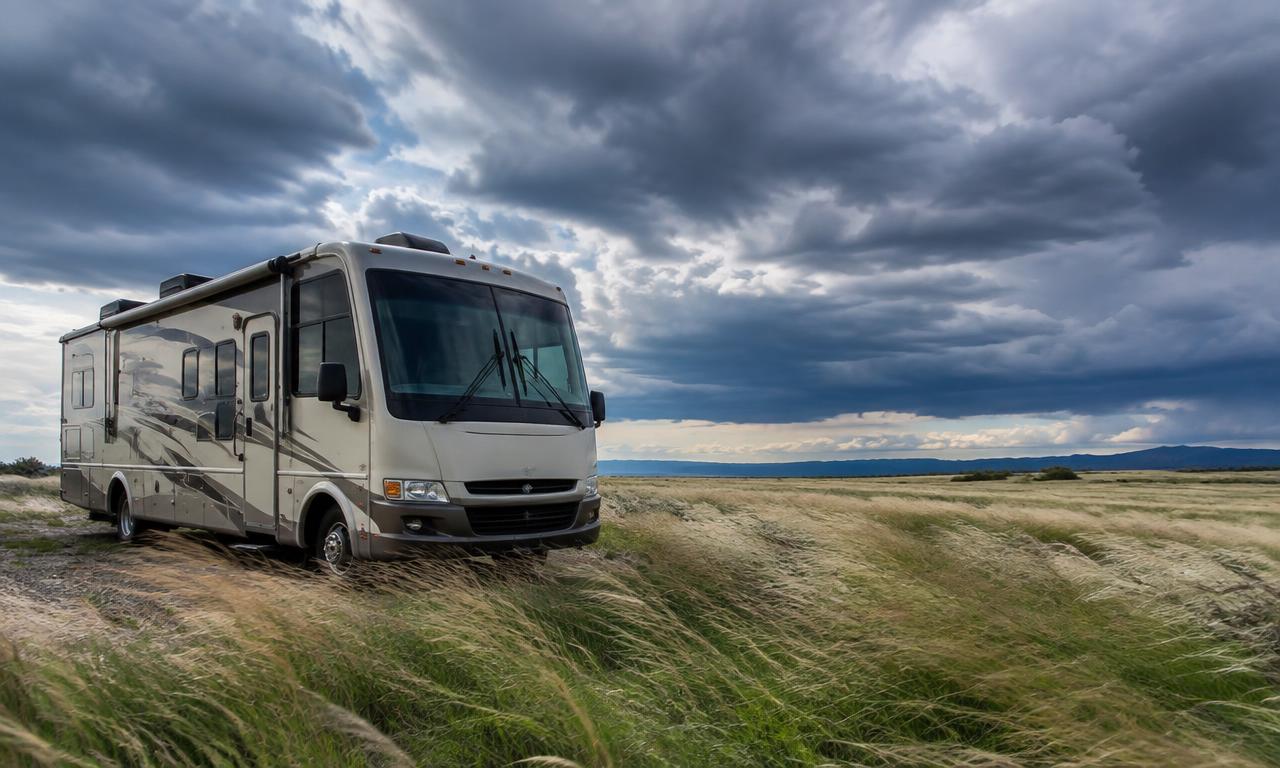
If you camp in southeast Wyoming or along the Colorado Front Range, you already know that wind is part of the package. It's the reason Cheyenne has a reputation, and it's the reason RVs here wear differently than rigs parked in calmer places. Awnings, roof sealant, and vent covers take the brunt of it.
Awnings: when to roll them in
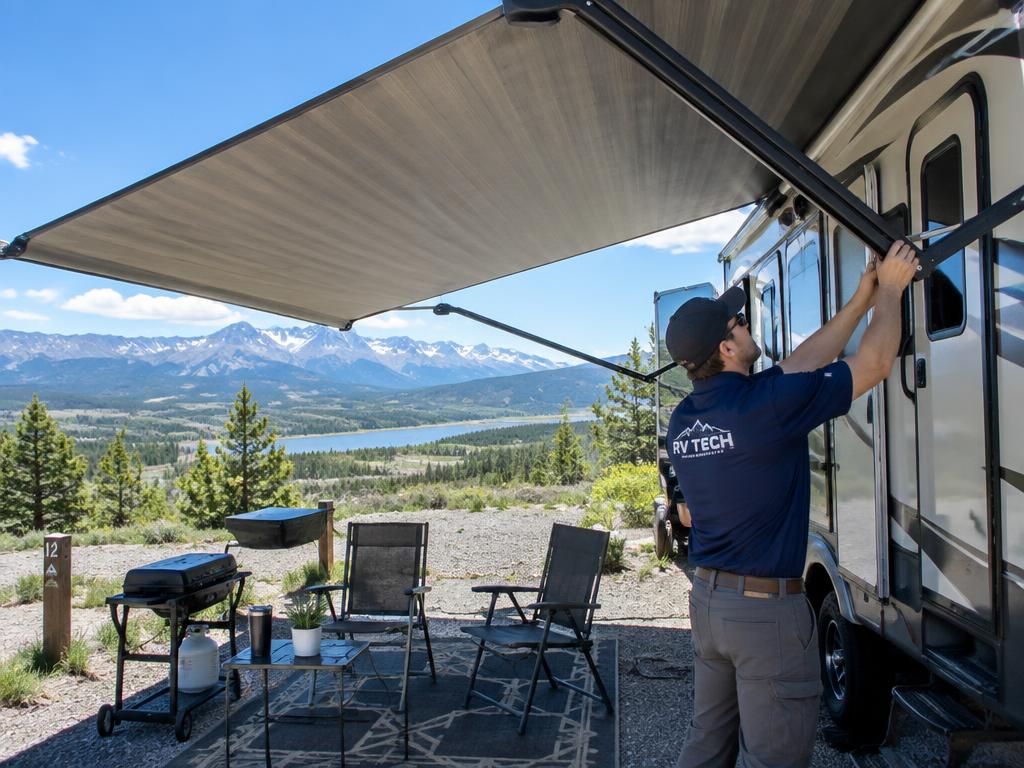
An extended awning acts like a sail. Even a moderate gust can lift the fabric, bend the arms, or pull the mounting brackets away from the sidewall. The simplest rule is to roll it in whenever you leave the campsite and before you go to sleep, no matter how calm it seems. Weather here can change in minutes.
If your awning has a wind sensor, it can help, but don't rely on it alone. Sensors react after the wind picks up, and a strong first gust can do damage before the motor finishes retracting.
Signs of awning wind damage
- Arms that look slightly bent or don't line up evenly when extended
- Fabric that sags in the middle or has a new tear near the roller
- Grinding, clicking, or a motor that stalls partway
- Brackets that look pulled away from the wall or loose screws
Small damage gets worse quickly. A bent arm puts uneven stress on the fabric, which then tears, which then flaps in the next wind and tears further.
Roof seams and sealant
Sealant around roof vents, the AC unit, skylights, antennas, and along the front and rear caps is what keeps water out of your ceiling. At elevation, UV exposure is intense, and the dry air pulls moisture from the sealant over time. Add constant wind-driven grit and temperature swings of 40 degrees between afternoon and night, and sealant cracks, shrinks, and lifts at the edges.
Water intrusion often starts small and stays hidden. By the time you see a stain on the ceiling, water may have been getting in for months, soaking into the roof decking and wall structure.
Vents and AC shrouds
Plastic vent covers become brittle in the sun and can crack or blow off entirely in a strong gust. AC shrouds can loosen as their mounting screws back out from vibration on the road. A missing vent cover lets rain straight into the rig, and a loose shroud can damage the unit underneath.
What you can check yourself
- From a ladder, look at the sealant around every roof fixture. You want it smooth and flexible, not cracked, chalky, or lifting.
- Gently press on vent covers to make sure they're secure and not brittle.
- Check that the AC shroud is tight and has no cracks.
- Inside, look at the ceiling around vents and the AC for any discoloration or soft spots.
- Extend and retract the awning while watching the arms and listening to the motor.
Only walk on your roof if you know it's rated to support weight, and always be careful with footing. Many RV roofs are not designed to be walked on everywhere.
Seal conditioning
Sealant that is aging but not yet failing can often be cleaned and conditioned to extend its life. That's cheaper and easier than waiting until it fails and needs to be removed and replaced. A seal inspection and conditioning service identifies which seals are healthy, which need treatment, and which need repair.
Build a simple wind-day routine
Before travel, walk around the rig and confirm that the awning is fully seated, vent covers are closed, and nothing on the roof is visibly loose. After a particularly windy drive, repeat the walk-around before settling in. Look for fresh ripples in the awning fabric, sealant edges that have lifted, and covers that no longer sit square. Inside, check the ceiling and upper cabinet corners after the next rain. A few minutes of inspection can catch movement before it becomes a torn awning or a hidden leak.
Storage position matters too. Park with the awning side away from the strongest prevailing wind when your space allows, and do not leave loose accessories attached to the awning hardware. Keep branches clear of the roof so wind cannot drag them across vents, sealant, or solar wiring. Photograph the roof once or twice a year from the same safe viewpoint. Comparing those photos makes slow changes easier to spot.
When to call a pro
Call for help if you find cracked sealant, any soft spot on the roof, ceiling stains, bent awning arms, or a motor that's struggling. Roof repairs start at $150 plus materials, seal inspection and conditioning starts at $75, awning repair starts at $150 with parts quoted separately, and awning cleaning and inspection starts at $75. If we're already on your roof for another service, a quick add-on roof inspection is $50.
Don't let the next windy week find the weak spot first. Call (855) 681-0474 and we'll come take a look wherever your rig is parked.
Need a hand with this?
We come to your rig anywhere within 50 miles of Cheyenne, and farther with a trip charge.