When Should You Winterize Your RV in Cheyenne, and What Happens If You Wait?
On the high plains the first hard freeze often shows up before the calendar says winter. Here's how to time it and what's at stake.
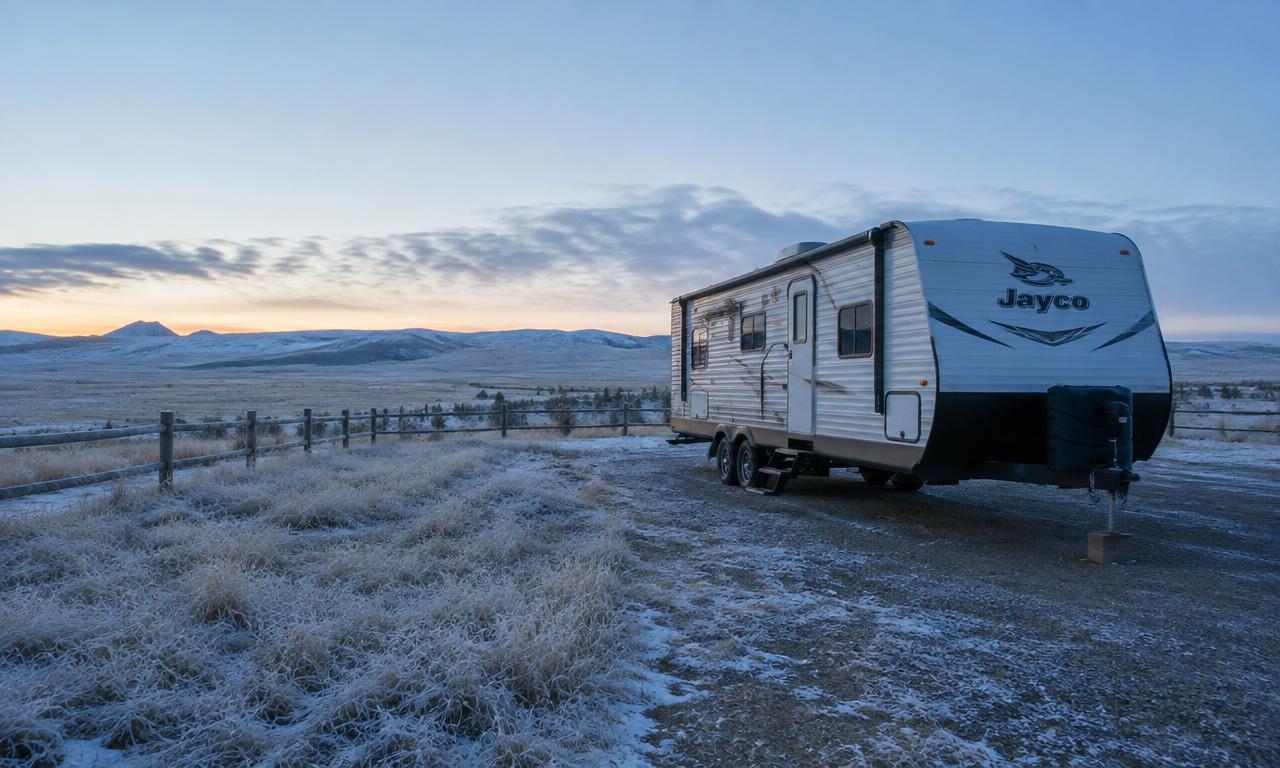
Ask anyone who has lived in Cheyenne for a few years and they'll tell you the same thing: winter doesn't wait for permission. A warm, bright afternoon in late September can turn into a night in the low 20s, and the wind makes it feel colder still. For an RV with water sitting in its lines, that one night can be enough to do real damage.
Why timing matters more here than in most places
Cheyenne sits at roughly 6,000 feet, and Laramie is higher. At elevation, clear nights lose heat fast. An RV's water lines run through exterior walls, under floors, and through compartments that offer very little insulation. When water freezes it expands, and that expansion has to go somewhere. Usually it goes into the weakest point: a plastic fitting, a faucet valve, the water pump housing, or the low-point drains.
Water heater tanks are especially vulnerable. If the tank is full when a hard freeze hits, the expansion can split the tank or crack the drain fitting. Those repairs cost far more than a winterization visit, and they often aren't discovered until spring, when you turn the water back on and find a puddle.
When to schedule
A good rule for Cheyenne and Laramie is to winterize after your last trip of the season and before overnight lows start dipping into the 20s. For many owners that means late September through mid-October. If you plan to camp into the fall, you can still use the rig after winterizing by bringing jugs of water for drinking and using campground facilities, or you can schedule the service right after your final outing.
Waiting until the first snow is the most common mistake we see. By then, the lines may already have frozen at least once.
Blowout versus antifreeze
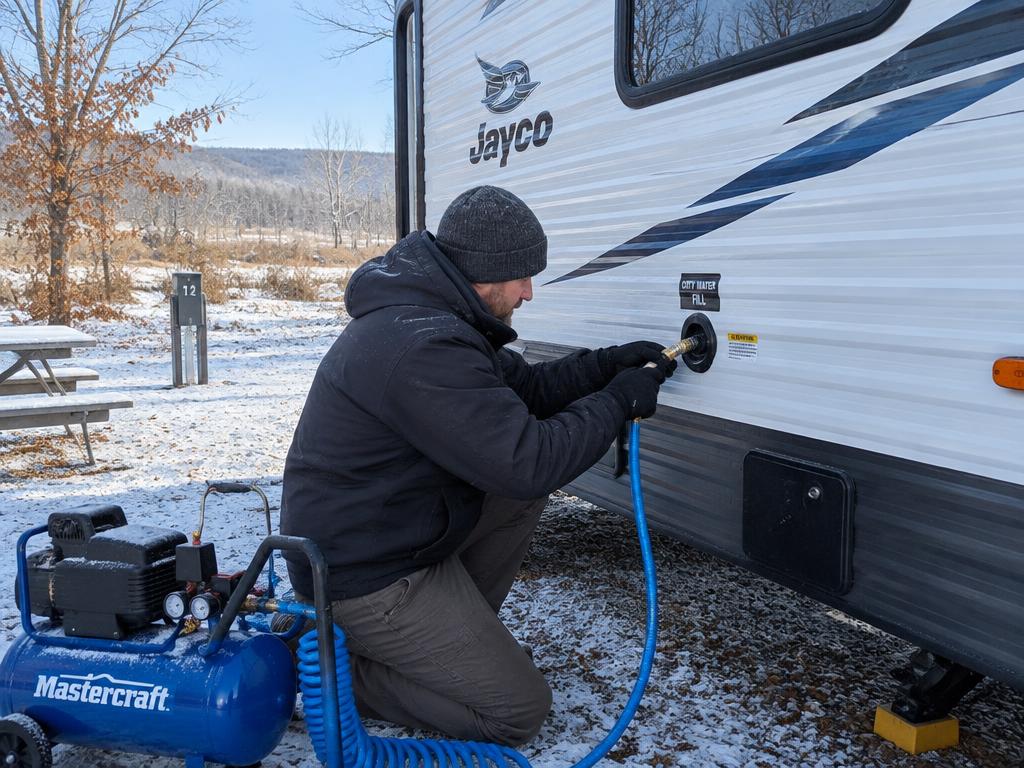
There are two main approaches, and a thorough winterization uses both. A low-pressure air blowout pushes residual water out of every line, faucet, and fixture. Then food-grade RV antifreeze is pumped through the system so anything left behind can't freeze solid. The antifreeze also goes into the P-traps and holding tank valves to protect seals.
The water heater gets bypassed during this process. Without a bypass, the tank would swallow several gallons of antifreeze for no benefit. Checking that the bypass valves are working is a small step that saves money and avoids a mess in spring.
The small details that matter
- Disconnect the battery so parasitic loads don't drain it over the winter. A dead battery that sits in the cold can freeze and be ruined.
- Prop the fridge doors open to prevent mold and mildew while the rig is stored.
- Check tire pressure and condition. Tires that sit all winter can flat-spot, and cold air lowers pressure.
- Open the low-point drains and leave the faucets in a neutral position so nothing is under pressure.
What you can check yourself
Before anyone winterizes your rig, walk through it with fresh eyes. Look under sinks for old drips or water stains. Make a note of any faucet that leaked last season or a toilet valve that didn't seal well. Run the water pump and listen: if it cycles on its own with every faucet closed, there's a leak somewhere that should be found before storage. Write these down so they can be handled during the same visit.
What happens if you wait
The most common freeze damage we see includes cracked PEX fittings behind cabinets, split faucet bodies, broken water pump housings, cracked toilet valves, and water heater drain plugs pushed out. Each one is fixable, but each one involves parts, labor, and sometimes water damage to cabinets or flooring that had nowhere else to go.
De-winterizing in spring
Spring is the other half of the job. The antifreeze gets drained, the fresh tank is filled, and the lines are purged until the water runs clear. The battery gets reconnected and checked. Then every major appliance, including the water heater, furnace, fridge, stove, and A/C, gets tested so problems show up in your driveway instead of at the campground. Tires get one more look, too.
When to call a pro
If you're not comfortable bypassing the water heater, finding every low-point drain, or running antifreeze through the system, a professional winterization is inexpensive insurance. Our winterization service starts at $150 and takes about 1.5 hours, and de-winterization in spring also starts at $150. We come to you, so the rig never has to leave its parking spot.
Ready to get your rig protected before the next cold snap? Call (855) 681-0474 or send a service request and we'll get you on the schedule.
Need a hand with this?
We come to your rig anywhere within 50 miles of Cheyenne, and farther with a trip charge.